Willy Russell
Willy Russell
TAKE A listen
to Willy Russell
Listen today to Willy Russell’s music on his website and experience a rich journey through his creative career. From heartfelt lyrics to memorable melodies, his work reflects the stories and influences that have shaped him over the years.
Take a listen today to one of Britain’s most celebrated writers, all in one place.

LOOKING back
to The Folk Years
Long before Educating Rita, Shirley Valentine or Blood Brothers, Willy Russell’s creative life was shaped by the vibrant folk scene that flourished across Liverpool and the North West in the 1960s.
What began as a young musician’s curiosity soon became something far more significant – a musical and cultural education that helped form the writer he would later become.
Looking back
…to The Folk Years
Long before Educating Rita, Shirley Valentine or Blood Brothers, Willy Russell’s creative life was shaped by the vibrant folk scene that flourished across Liverpool and the North West in the 1960s.
What began as a young musician’s curiosity soon became something far more significant – a musical and cultural education that helped form the writer he would later become.
early
influences
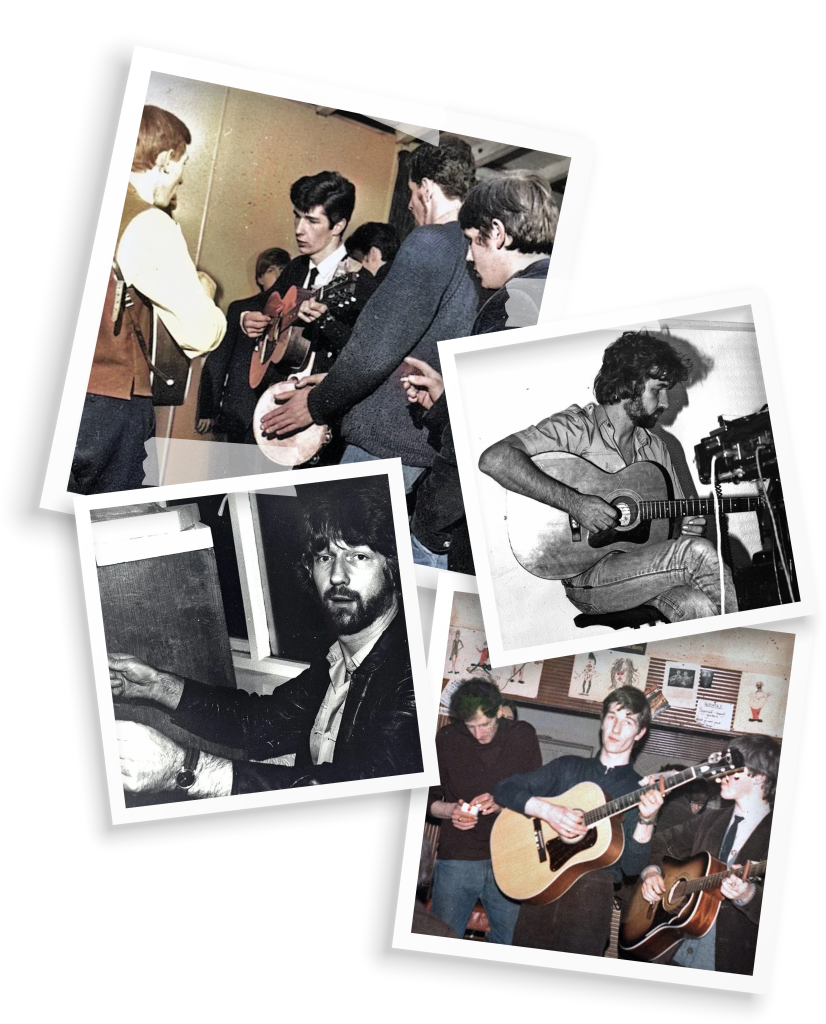
Music had always been present in Willy’s life, though he didn’t yet recognise it as folk music. In the 1950s the songs were simply part of the everyday soundtrack of childhood – school hymns like Lord and Father of Mankind and To Be A Pilgrim, radio favourites such as The Big Rock Candy Mountain and Freight Train, and the skiffle and rock and roll that exploded across Britain through artists like Lonnie Donegan, Buddy Holly and Chuck Berry.
Then, in the early 1960s, everything changed.
A visit to Liverpool’s Cavern Club to see The Beatles proved transformative. Inspired, Willy bought a guitar along with a friend, Tom Evans, who would later go on to become the bassist with the band Badfinger. It quickly became clear that Evans possessed the greater musical ability, but Russell discovered something else entirely: a love of words and songwriting.
Across the Atlantic another revolution was taking shape. Bob Dylan’s arrival showed that technical virtuosity wasn’t essential – songs and stories could matter just as much as musicianship. For Willy and many others, Dylan opened the door.
the
movers
In 1964 Willy formed his first group, The Movers, playing the working men’s club and social club circuit around Merseyside. Their repertoire blended contemporary songs with Willy’s own writing, including I Ask You a Question, recorded at Percy Phillips’ legendary Kensington studio in Liverpool.
But it was the discovery of Liverpool’s folk club scene that truly changed direction.
discovering
the Folk clubs
The Green Moose Café and the Cross Keys quickly became regular haunts. At the Cross Keys Willy witnessed two very different performances that left a lasting impression: a young American singer named Paul Simon, and The Watersons, who sang unaccompanied – and, memorably, wore wellington boots in July. Further exploration led to the folk club in the basement of Samson and Barlow on London Road, where Willy encountered the Calton Three – Jim and Shirley Peden with John Kaneen – performing long, unaccompanied traditional ballads alongside Kaneen’s wonderfully eclectic repertoire.

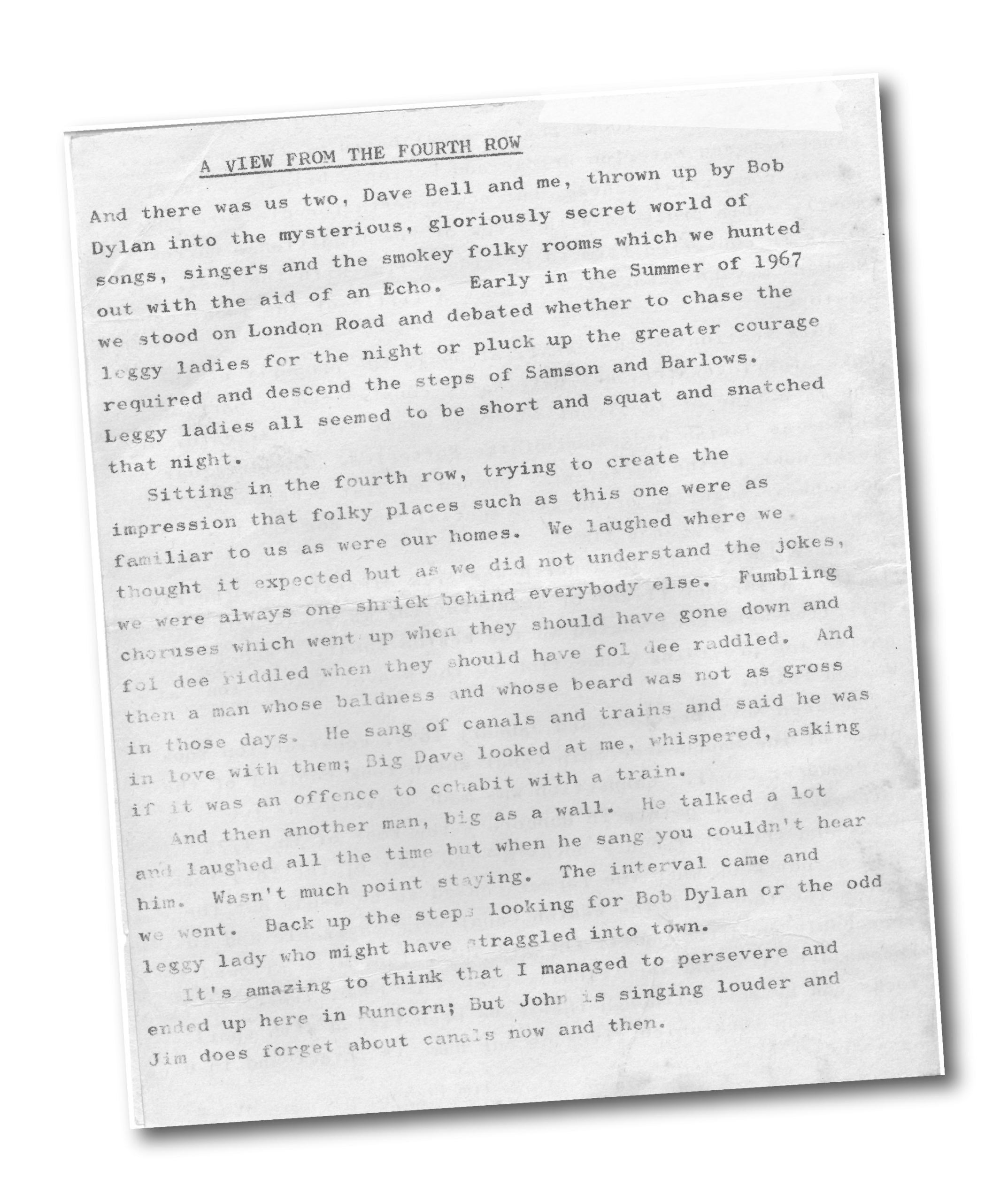
And there was us two, Dave Bell and me, thrown up by Bob Dylan into the mysterious, gloriously secret world of songs, singers and the smokey folky rooms which we hunted out with the aid of an Echo. Early in the Summer of 1967 we stood on London Road and debated whether to chase the leggy ladies for the night or pluck up the greater courage required and descend the steps of Samson and Barlows. Leggy ladies all seemed to be short and squat and snatched that night.
Sitting in the fourth row, trying to create the impression that folky places such as this one were as familiar to us as were our homes. We laughed where we thought it expected but as we did not understand the jokes, we were always one shriek behind everybody else. Fumbling choruses which went up when they should have gone down and fol dee riddle when they should have fol dee raddled.
And then a man whose baldness and whose beard was not as gross in those days. He sang of canals and trains and said he was in love with them; Big Dave looked at me, whispered, asking if it was an offence to cohabit with a train.
And then another man, big as a wall. He talked a lot and laughed all the time but when he sang you couldn’t hear him. Wasn’t much point staying. The interval came and we went. Back up the steps looking for Bob Dylan or the odd leggy lady who might have straggled into town.
It’s amazing to think that I managed to persevere and ended up here in Runcorn; But John is singing louder and Jim does forget about canals now and then.
Willy Russell, 1969

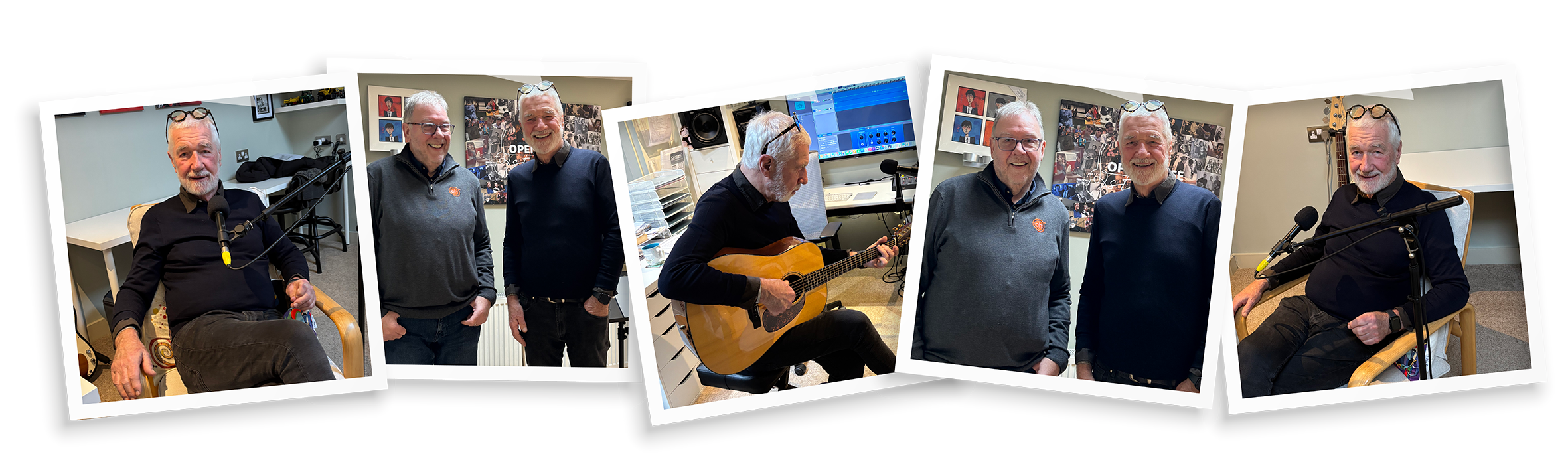
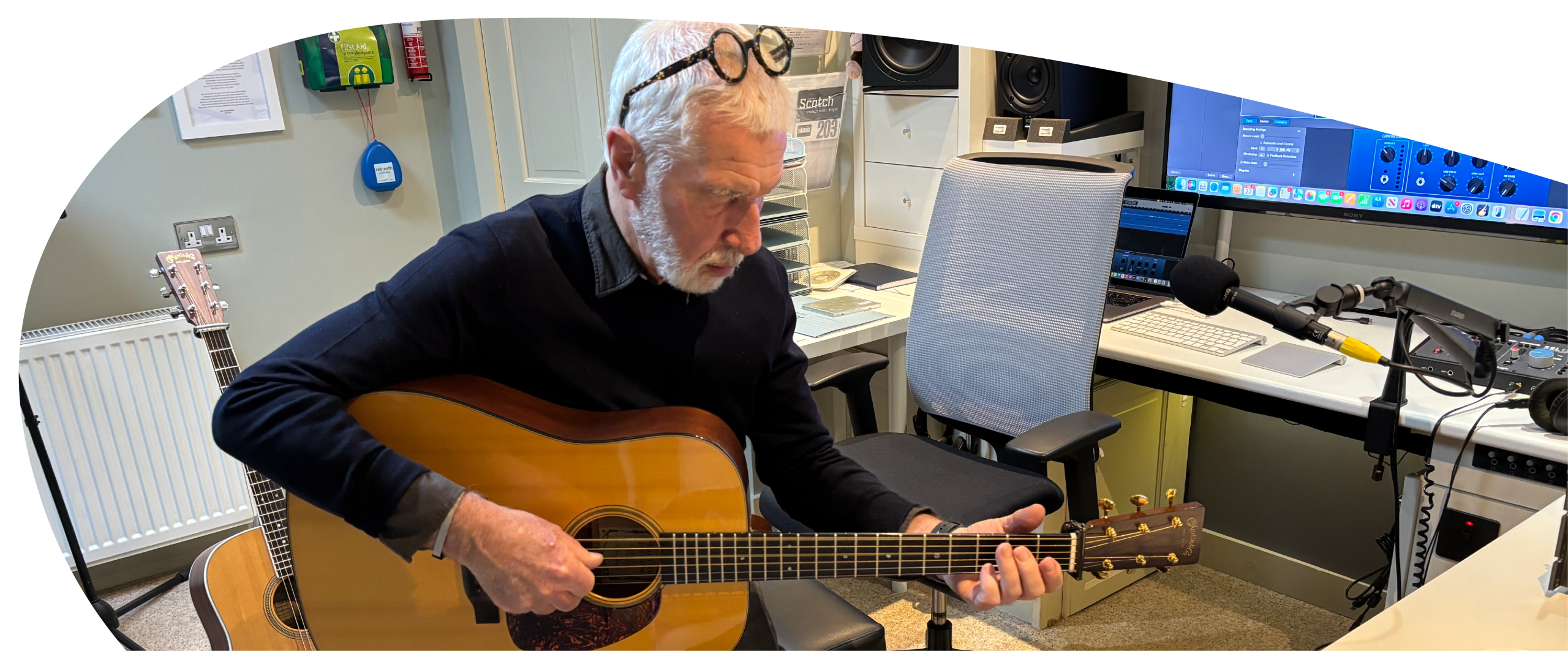
In this extended edition of Keep Folk Talking, Brian Jones is joined by legendary playwright and songwriter Willy Russell for a vivid journey back to the roots of a remarkable creative life.
From a childhood steeped in music before the days of television, through the electrifying discovery of The Beatles at the Cavern, Willy recalls the moments that shaped his artistic path. With warmth and wit, he reflects on early influences from Buddy Holly to Bob Dylan, the pull of the 1960s folk revival, and the vibrant Liverpool scene that saw him find his voice as a writer.
Through stories of the Spinners Club, the iconic Green Moose, and the friendships and chance encounters that defined an era, this is a rich, entertaining conversation about creativity, community, and the unpredictable moments that spark a lifetime in the arts.
Music credits:
“Any Father” and “Crazy Days” are taken from Willy Russell’s 2005 album Hoovering the Moon.
“Easy Terms” is performed by Barbara Dickson and Willy Russell, recorded live in studio.